
(0 Comentarios)
Comenta y valora este libro
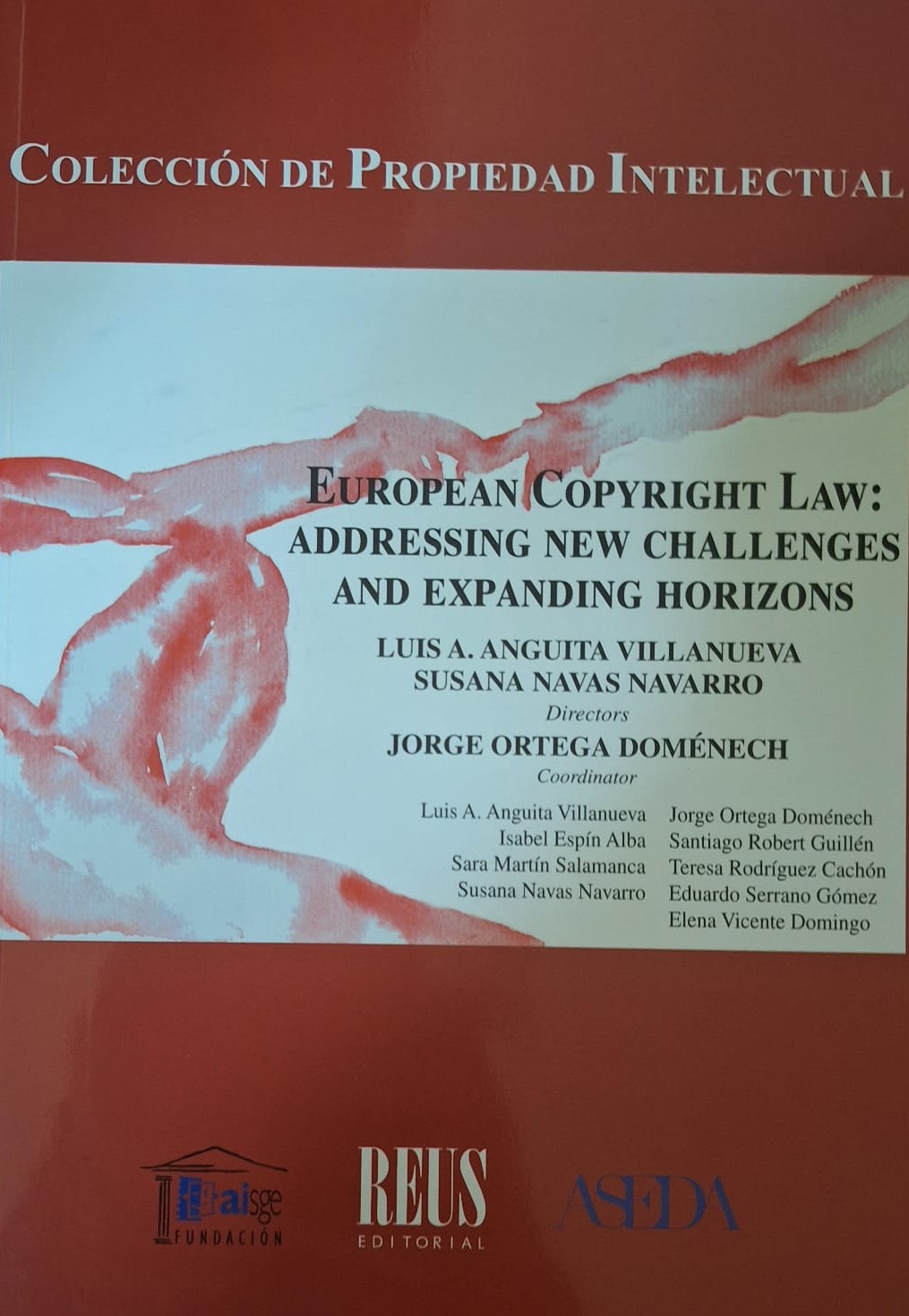
El libro European Copyright Law: Addressing New Challenges and Expanding Horizons examina la evolución del derecho de autor en Europa, enfocándose en su adaptación a la era digital. A través de un análisis detallado, se abordan las reformas legislativas implementadas para armonizar las leyes de propiedad intelectual entre los Estados miembros de la Unión Europea. Se destacan los esfuerzos por equilibrar la protección de los derechos de los autores con las necesidades del mercado digital, considerando la diversidad cultural y los avances tecnológicos.
Además, el texto explora los desafíos emergentes, como el impacto de la inteligencia artificial y el uso de datos en la creación de contenido. Se discuten las implicaciones de la minería de textos y datos, así como la necesidad de actualizar las normativas para abordar las nuevas realidades del entorno digital. El libro también analiza la jurisprudencia del Tribunal de Justicia de la Unión Europea y su influencia en la interpretación y aplicación del derecho de autor en los Estados miembros. En conjunto, ofrece una visión integral de los esfuerzos por modernizar y fortalecer la legislación de propiedad intelectual en Europa frente a los retos contemporáneos.
Are the copyright and authors’ rights systems truly that different? Why is the model of copyright protection within the European Union globally relevant? Should access to cultural heritage assets or open science take precedence over copyright? Are online service providers liable for copyright infringements committed by their users? How does the European Union address the protection of these rights in light of the emergence of Generative Artificial Intelligence? How are holders of related rights protected under European legislation? Are there new forms of creation that redefine the subject matter of copyright today and require regulation under European Union law? Are haute cuisine and video games part of this new object? These and other questions are addressed in the works compiled by the university professors who contribute to this first volume in English of the Intellectual Property Collection published by REUS.
European Union copyright law presents a model that appears to contrast with the copyright system of Anglo-Saxon countries. However, this study reveals that there are more similarities than differences between these two traditional approaches to protecting creators and the cultural industries that depend on their work. Readers engaging with the works of leading copyright scholars will observe that the European Union is emerging as one of the most significant efforts at global harmonization. The existence of a supranational legal framework that overrides the laws of its member states grants the EU system unique and diverse features, particularly in its capacity to safeguard rights increasingly challenged by new technologies. These rights must be protected and upheld from a global perspective, and in an era marked by the fragmentation of international alliances, EU law stands out as a global reference point in this field.
I. Introduction
II Authorship
III Creation
IV Moral rights
V Work for hire
VI Fair use
VII Conclusions
I Introduction
II The impact of «retro emulation» on the video game industry
2.1. The emulation process
2.2. Legality of the distribution of old video games in the form of ROM files and the use of emulators, comparing the American and European legal regimes
2.2.1. The legal battle in the USA
2.2.1.1. Prior cases regarding the use of reverse engineering
2.2.1.2. Cases regarding the use of retro emulation
2.2.2. Emulation under UE legislation
2.3. Arguments for and against emulation
2.3.1. Arguments for
2.3.2. Arguments against
III Preservation and conservation of retro video games
3.1. Problem of conservation for video games
3.2. Benefits of preservation vs damage to copyright owners
IV Some conclusions: what is the legal solution for «retro» emulation?
I Introduction
II The treatment of culture and cultural heritage in the founding texts of the Union: original law
2.1. The Maastricht Treaty: Foundation Stone of the European Union and the Constitutionalization of Culture
2.2. Intermediate Treaties Leading up to the Current Constitutional Texts of the EU
2.3. The Treaty on European Union (TEU) and the Treaty on the Functioning of the European Union (TFEU)
III Derivative law and the interrelationship between copyright and cultural heritage
3.1. Directive 2001/29/EC of the European Parliament and of the Council of 22 May 2001 on the Harmonization of Certain Aspects of Copyright and Related Rights in the Information Society
3.2. Directive 2012/28/EU of the European Parliament and of the Council of 25 October 2012 on Certain permitted uses of orphan works
3.3. Directive (EU) 2019/790 of the European Parliament and of the Council of 17 April 2019 on Copyright and Related Rights in the Digital Single Market and Amending Directives 96/9/EC and 2001/29/EC
IV Conclusions
I Preliminary remarks: employment precariousness of audiovisual performers
II Performers and intellectual property: European approach
2.1. International Protection of Performers’ Rights
2.2. European Copyright Law
III CDSM Directive and fair remuneration: its transposition in spain
IV Other concerns: special mention for artificial intelligence
V Conclusion
I Approach, evolution and disruptions of the safe harbour liability model for intermediaries in the European environment
II The copyright-infringing intermediary in the European digital environment: designing a fragmented, modular and collective choral safe harbour system
III Criteria for access to safe harbours in the general regulatory system of the intermediary service provider’s exemption from liability
IV Effect of the application and autonomous interpretation of the general system to the copyright area: is the harbour still safe for intermediaries in the praetorian model?
V Impact of a distinct model of intermediaries’ liability for copyright: the shift in balance between liability and exemptions
5.1. Decline of a stressed general regulatory system and changing winds
5.2. A separate and distinct model of safe harbours
VI Analysis and evidence of mismatches with the reality of specific cases and questions about the future
I What sparked my questioning
II A disclaimer: my role onwards
III First things first. Introductory remarks
3.1. Data and Information Governance in the Present-Day Digital World
3.2. The Almost Unnoticed Shift of the European Copyright Framework: the Right Direction?
IV The power of technology: why not a debate in the field of research?
4.1. The Tyranny of Bibliometrics
4.2. Global Phenomenon of Platform Governance: Who Wins the Final Game?
4.2.1. General Landscape
4.2.2. Figures: That’s All
4.2.3. How this Picture has been Addressed Throughout Other Industries
V Access to knowledge movement, open science movement and related issues
5.1. Premises
5.2. My Reasons to Disagree with this Neverland
VI Final reflections (not conclusions)
VII Conflict of interests declaration
I Introduction
II The text prompt
III Output generated by the artificial intelligence model
3.1. The Legal Protection of Data
3.2. Open Science
3.3. The Interplay Between the Text-and-Data Mining Exception and the AI Act
3.3.1. The Text and Data Mining Exception in Europe and the Fair Use Doctrine in the USA
3.3.2. The Obligation of Compliance with the EU Law on Copyright and Related Rights by GPAIM Providers
3.3.2.1. Policy to comply with Copyright Law. Opt-out obligation
3.3.2.2. Summary of the content obligation
3.3.2.3. Obligation to transparency stipulated in Art. 50.4 AI Act
IV Copyright infringement in the training phase
4.1. Infringement of the Rights to Exploitation of Copyrighted Works and Other Subject Matters
4.2. Is the Output Protected by Copyright Law? The Relevance of the Service’s Terms and Conditions
V Conclusions
I Introduction to the topic and the context
II The question arises: why is an exception needed for TDM?
2.1. The Data Economy, the Reason for the TDM Exception to Copyright
III The incorrect incorporation of the Directive in Spain
3.1. The European AI Act of 13 June 2024 and Text and Data Mining (TDM)
IV New legal trends and best practices in opting out in copyrigted works
V Tech companies have already infringed Copyright using copyrighted works for TDM purposes
5.1. The New York Times vs. Open AI and Microsoft
5.2. Copilot Predicts the Verdict of the Trial
VI Provisional conclusion
I Foundations of culinary authorship
II From ethics to law
III Copyright protection for culinary works
3.1. Original works, innovations and discoveries
3.2. The irrelevance of genre or type of work for access to protection
3.3. The culinary work
3.3.1. Originality as an intellectual reflection of the author’s creative choices
3.3.2. Precision and objectivity in the expression of the culinary work
3.3.2.1. Culinary works and culinary concepts
3.3.2.2. The representative form of culinary works
3.3.2.3. The issue of legal protection of taste
3.3.2.4. The protection of the visual form
IV Alternative frameworks for the protection of culinary creations
4.1. Registers of culinary creations
4.2. Legislative proposals for the protection of culinary creations
4.3. Food NFTs and blockchain in culinary innovation
V Concluding remark
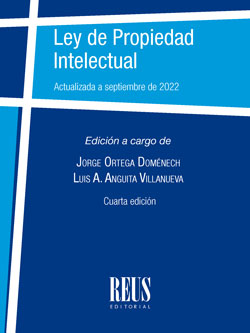
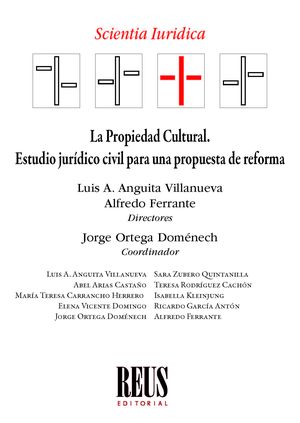
Ortega Doménech, Jorge ; Anguita Villanueva, Luis Antonio
Reus. 2022
16,01 €
15,21 €
Navas Navarro, Susana ; Camacho Clavijo, Sandra
Tirant lo Blanch. 2016
43,00 €
40,85 €
Carrancho Herrero, Mª Teresa; De Román Pérez, Raquel ; Ortega Doménech, Jorge ; Rodríguez Spinelli, Francesca Antonella ; Triana López, Beatriz ; Iglesias Rebollo, César
Reus. 2007
16,01 €
15,21 €
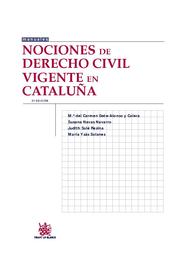
Navas Navarro, Susana ; Solé Resina, Judith ; Ysás Solanes, María; Gete-Alonso Y Calera, Mª Del Carmen
Tirant lo Blanch. 2011
39,00 €
37,05 €
Gete-Alonso Y Calera, Mª Del Carmen ; Ginebra Molins, Mª Esperança ; Navas Navarro, Susana ; Badosa Coll, Ferrán
Marcial Pons. 2010
50,00 €
47,50 €
Bercovitz Rodríguez-Cano, Rodrigo (Coord.)
Tecnos. 2013
115,00 €
109,25 €
36,00 €
34,20 €
18,00 €
17,10 €
36,40 €
34,58 €
20,02 €
19,02 €